Principal Agent
Ryan Malloy
40 years of building what doesn't exist yet.
The Beginning
A kid whose toy store was RadioShack. Forrest Mims' Engineer's Mini-Notebooks. A 286 with a Hercules monitor. BBS culture, 2400 baud modems, ANSI art, and door games. No internet, no tutorials, no Stack Overflow—just curiosity and a manual.
By 1988, that kid was getting paid to solve problems with computers. Self-taught, self-motivated, and completely hooked. Forty years later, the tools have changed. The curiosity hasn't.
The Arc
Full-Stack Payment Infrastructure at Scale
Built and operated ClickBank—the largest online digital payment platform of its era. Full-stack development in 2005: payment processing with fraud protection handling millions in daily transactions. Also managed the call center and conducted fraud research.
Then helped develop Kount, a fraud detection system eventually acquired by Equifax in 2021.
Independence
After helping build systems worth billions, a choice: keep building for others, or build for people who need something that doesn't exist yet. Supported Systems was the answer. No investors, no board, no compromise. Just direct relationships with clients who need problems solved.
From the Archives
Want to go deeper? These are the stories behind the story.
Full Stack Means Full Stack
Most "full stack" developers mean frontend and backend. Here, it means the whole thing.
Software
Python, Go, JavaScript, Bash, C. 24+ years on the command line. Vim is the editor.
Hardware
Circuit board design, enclosure prototyping, custom devices when commercial options fail.
Infrastructure
WAN/LAN, Cisco routing and switching, cloud and on-prem. Ansible, Terraform.
Communications
IP telephony, contact centers, enterprise voice. Licensed amateur radio operator.
The Work
Stories from two decades of building what didn't exist.
Demostar
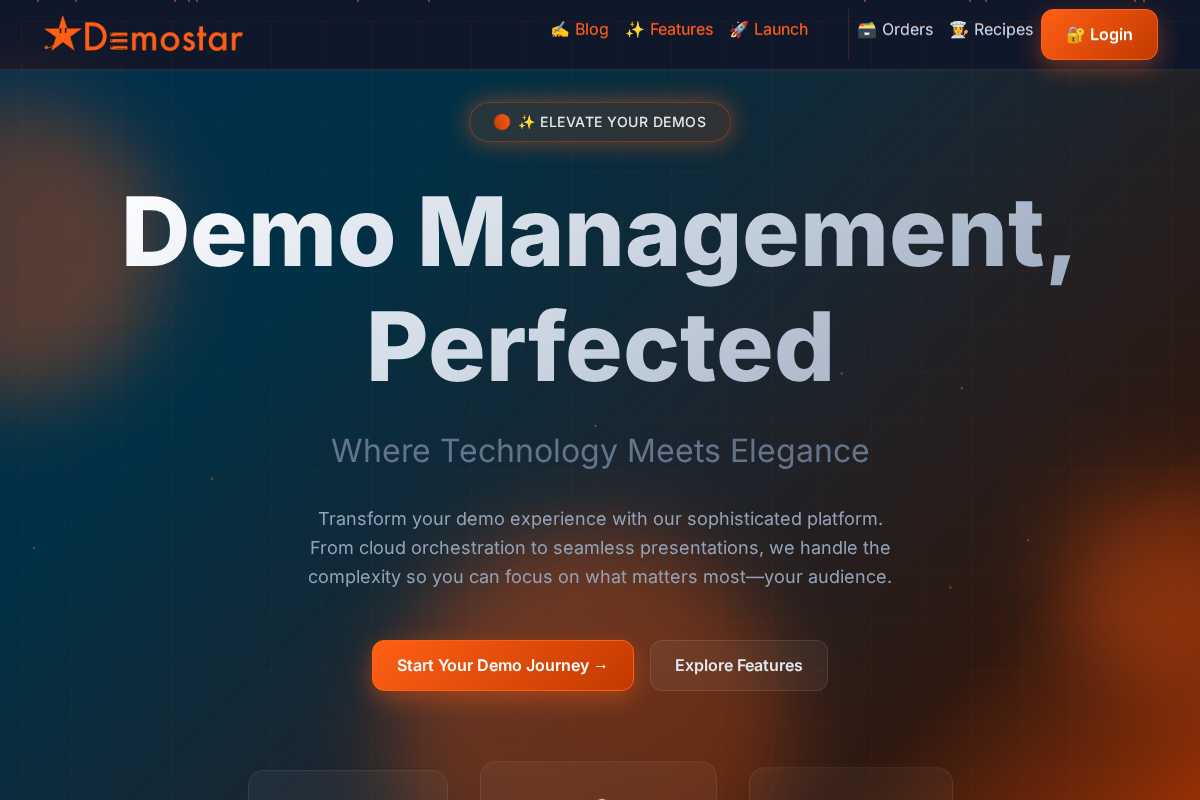
In 2002, a trainer named Bill Sprunk handed me a business card with a physical hole where the dot in his URL should have been—he'd punched it out. Twenty-five years later, I remembered it as a star.
That's what great details do: they grow larger than life. The actual hole was a circle, but my memory made it a star. Combine that with "the rockstar of demos" and Demostar was born.
25,000+ lines of code. 2,111+ interactive demos delivered. Zero failures. Trusted by enterprise teams at Zscaler and beyond.
The detail that matters: The smallest details grow larger than life. A punched-out circle became a star in memory—proof that craft creates lasting impressions.
TigerStyle
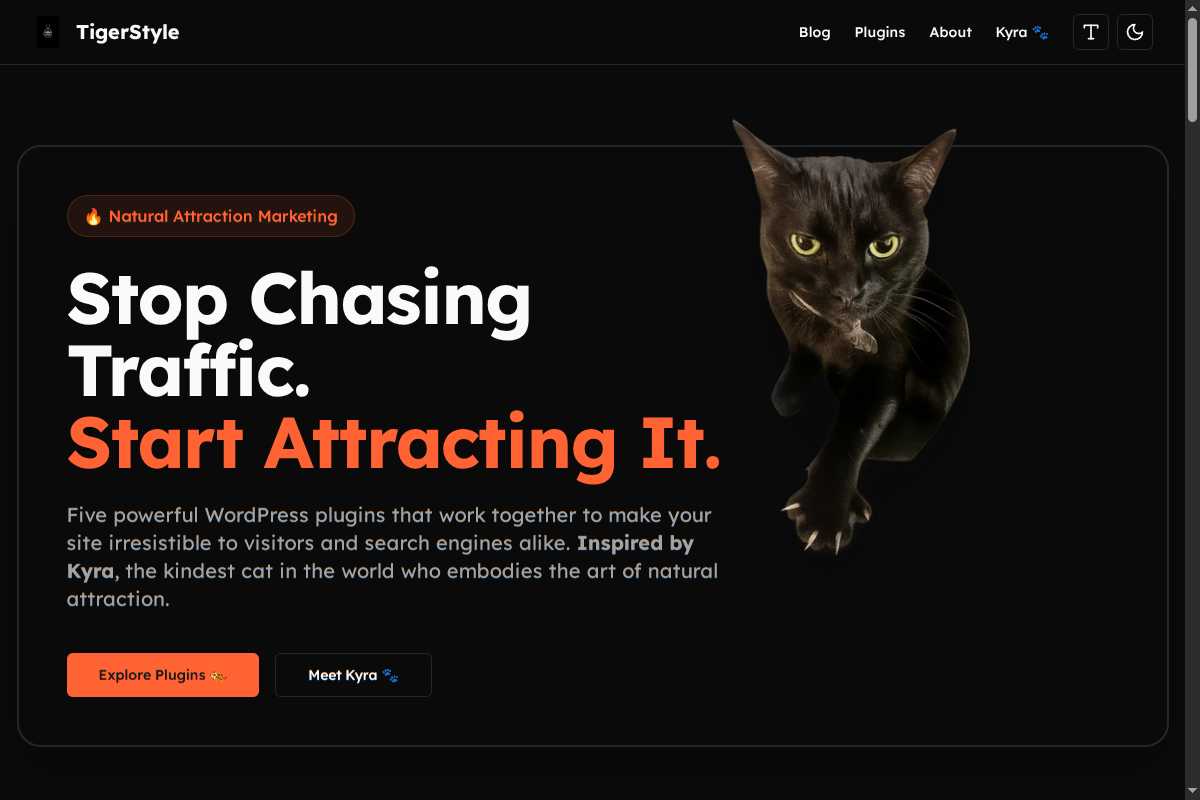
TigerStyle is a collection of essential WordPress plugins that transforms the WordPress development experience from painful to productive.
WordPress out of the box is... a lot. Between the bloated admin, missing developer tools, and endless plugin conflicts, it's easy to understand why developers avoid it. TigerStyle is the answer—a carefully curated set of plugins that strip away the cruft and add what's actually needed.
The collection includes admin enhancements, developer tools, performance optimizations, and security hardening—all tested to work together without conflicts. It's WordPress the way it should have shipped.
The detail that matters: WordPress doesn't have to be painful. The right plugin stack transforms it from "necessary evil" to genuinely productive.
PayThatWay

2008. I left my position at Keynetics with a two-year non-compete. While working on the DirecTemp project, I remembered something from my youth: using a Walkman tape head and some creative software to read magnetic stripe data. The idea stuck with me.
The lawyers at Givens Pursley LLC (hi Bill!) said I had to wait. When Square announced their iPhone dongle in 2009, I saw the gap: their solution only worked with iPhones—6% of the market. I pivoted to Bluetooth. No smartphone required.
The answer was a keychain-sized Bluetooth credit card reader. Custom PCB design, Bluetooth 4.0 chipset, lithium-polymer battery. Just pair, swipe, and the device auto-dialed PayThatWay to complete the transaction.
75% market coverage—219 million devices—when competitors were stuck at 6%. Point-to-Point Encryption (P2PE) meant merchants got card-present rates on mobile transactions. First tokens manufactured in Idaho, September 2010.
The detail that matters: Sometimes the elegant solution isn't software. It's designing hardware that works with what people already have.
Formula-E Telemetry
Electric racing at 200+ mph. Split-second decisions. Data that can't wait.
Dragon Racing (now DS Penske) needed real-time telemetry that could keep up with the DS E-TENSE FE19 cars. Battery status, motor performance, tire conditions—all streaming live to the pit crew, processed and visualized before the car completes a lap.
When milliseconds matter, you build different. The system we created delivered race-critical data with the reliability that professional motorsport demands.
The detail that matters: This isn't dashboard software. It's the difference between winning and running out of battery on the final straight.
DirecTemp
2009. Temperature monitoring for medical and industrial applications. The problem wasn't measuring temperature—it was getting the data from sensor to cloud simply and reliably.
We built a dual-protocol system. For consumers: the iPhone headset jack. Every phone already had one. No Bluetooth pairing, no WiFi configuration. Plug in the sensor, launch the app, done.
For industrial and medical deployments: Jennic JN5139 wireless microcontrollers running IEEE 802.15.4, 6LoWPAN, and ZigBee. Mesh networking that could blanket a warehouse or hospital wing with temperature sensors, all reporting back through a single gateway.
This was cutting-edge in 2009—6LoWPAN was the foundation of modern IoT before "IoT" became a buzzword. We were building mesh sensor networks while everyone else was still arguing about Bluetooth vs WiFi.
The detail that matters: Sometimes you need two solutions: one that's dead simple for consumers, another that scales for enterprise. The elegance is in knowing when to use which.
Everwas

Something breaks on a Wednesday. You triage it, you fix it, and the next morning someone asks whether that machine was actually patched when it went down.
Most monitoring tools cannot answer that. They store one timestamp and overwrite the past, so what they think now is all they have ever thought. Everwas stores every inventory fact on two time axes instead: when it was true on the machine, and when the server learned about it. Late-arriving data adds to the record rather than silently rewriting it.
The rest of the job comes along too. Live telemetry and alerting with cooldowns, a real terminal in the browser with recorded sessions, script delivery that survives sleeping laptops, and patch management across apt, dnf, pacman, Windows Update, and macOS softwareupdate. The agent is a single static Go binary that dials out, so there are no inbound firewall holes to argue about.
There is an MCP server built in, so an assistant can query the fleet directly. Reads are open, anything that changes a machine needs an explicit confirmation, and without one you get a dry-run plan instead of a surprise.
The detail that matters: Monitoring tools conflate "what was true" with "what we knew." Keeping those on separate clocks is what makes post-incident questions answerable instead of a memory exercise.
Self Serve Labs
Netflix for network labs. Weekly multi-million dollar deal presentations, large training classes, and custom labs—all needed complex network environments provisioned on demand, without waiting for IT or fighting over shared resources.
The platform transformed manual lab setup from hours to minutes. Engineers could browse, provision, and access complete network environments through real-time WebSocket consoles. Behind the scenes: VMware vSphere automation, intelligent scheduling with PostgreSQL range queries, and Redis Sentinel for high availability.
All handcrafted lines of Python, 1,791 commits over 5 years. Eliminated configuration errors and dramatically improved hardware utilization.
The detail that matters: When millions in revenue depend on a demo going smoothly, "good enough" isn't an option. You build for reliability first.
PrezHub
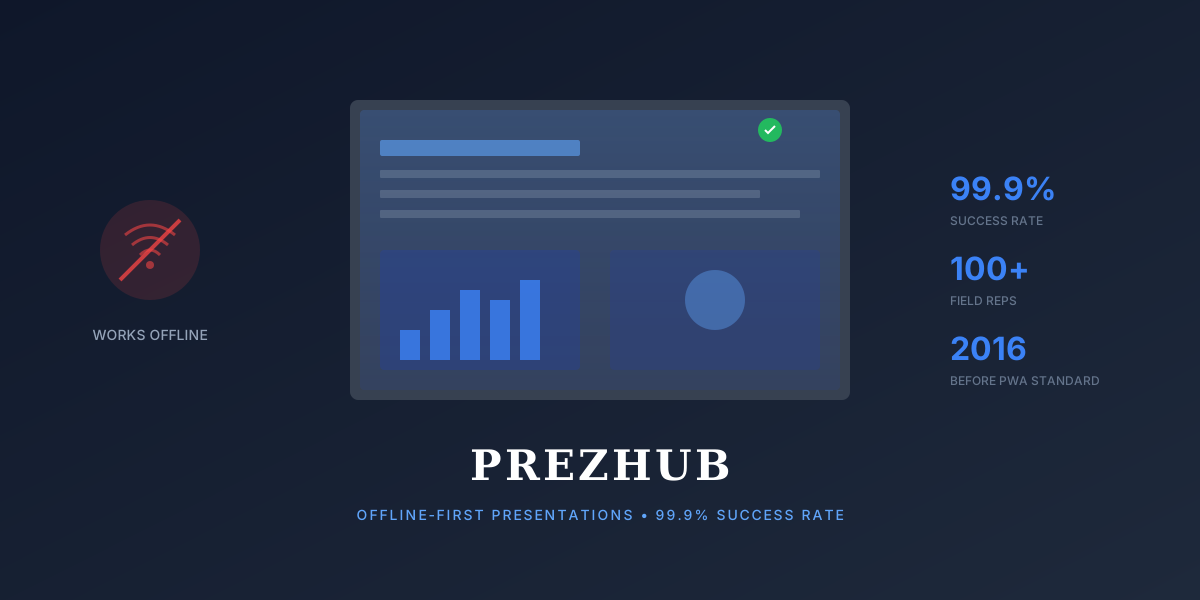
2016. Two years before PWA standards existed. Universal Technical Institute needed their field representatives to deliver flawless presentations in high school gyms with terrible WiFi—or no WiFi at all.
Working with Mind Over Eye (part of MotorTrend) as the creative firm, we built offline-first before it had a name. A custom 499-line service worker with multi-tier caching. Local event queuing that synced when connectivity returned. Multi-database architecture (PostgreSQL, CouchDB, LocalForage) with conflict resolution for presenter customizations.
99.9% presentation success rate in offline environments. 100+ field representatives across the country. A solution that solved a problem the industry wouldn't address for two more years.
The detail that matters: Being early isn't a disadvantage when you're solving a real problem. We didn't wait for standards—we built what users needed.
ClickBank
2005. Full-stack before "full-stack" was a term. The largest digital payment platform of its era. Millions in daily credit card transactions. 15,000+ merchants across 200+ countries. And fraud everywhere.
I built the payment processing system including the fraud detection engine: 250+ dynamic rules, sub-50ms response times, real-time risk scoring. Managed the call center. Conducted research on emerging fraud patterns. Pattern recognition that caught what rule-based systems missed.
0.8% chargeback rate—when industry average was 2-3%. 99.9% uptime across 8 years. 50,000+ transactions daily at peak, 150 per second capacity. This is where I learned that scale and security aren't opposites.
The detail that matters: Fraud detection that's too aggressive kills legitimate sales. Too permissive, and you lose everything to chargebacks. The art is in the balance.
Blue Cross of Idaho
2010–2018. Eight years modernizing telecommunications infrastructure for Idaho's largest health insurer. Hundreds of agents across 20+ locations. When members call about their healthcare, the phone system can't fail.
Started with legacy IVR deployment (Convergys/Intervoice), then architected and deployed Cisco UCCE—the enterprise-grade contact center platform. Custom CVP development replaced the aging IVR with modern, maintainable call flows. Real integration, not band-aids.
The scope kept expanding: VMware infrastructure, Captiva OCR for document processing, RightFax for secure faxing (healthcare still runs on fax), phone-based payment processing. Each project built on the last.
Video phones in 2016. Four years before COVID made video calling mandatory, we deployed video endpoints for member services. Sometimes you're just early.
The detail that matters: Healthcare telecommunications isn't glamorous, but when a member calls about a claim denial or a prescription question, the technology has to disappear. It just has to work.
Septic.Report
Sometimes the 💩 work is the most important work.
Idaho's septic permit data was scattered across seven health districts—each with different systems, different formats, different accessibility. Homeowners buying property couldn't easily verify septic history. Installers couldn't find regulations. Real estate agents were flying blind.
permits.septic.report aggregates permit records from all seven districts into one searchable database. Map-based visualization, contractor directories, CSV exports. The knowledgebase indexes 97 documents, the 350-page DEQ Technical Guidance Manual, and 85 diagrams—all full-text searchable across 44 counties.
Built in collaboration with Qube Septic, a long-time client serving the Treasure Valley since 2010. When you work with the same client for years, you learn their industry inside and out.
The detail that matters: Government data belongs to the public. Sometimes making it accessible just requires someone willing to do the unglamorous aggregation work.
Inspect.Systems
Home inspectors spend hours writing reports after leaving a property. What if the report was 90% done before they left the site?
inspect.systems analyzes photos as you take them—identifying outlets, breaker panels, water heaters, defects. Voice-to-text captures notes. Thermal imaging spots moisture and heat loss. The automation works silently while you inspect.
Results: 75% reduction in report writing time. Inspectors scaling from 18 to 55+ inspections monthly. ROI in 2-3 weeks.
The free PWA version, inspect.pics, brings core inspection management to anyone with a browser—no app store required.
The detail that matters: The best automation is invisible. Inspectors do what they've always done—walk through, take photos, make notes. The system handles the rest.
MCP Server Collection
The web took 30 years to get security mostly right. MCP gives us the chance to do it right from the start.
The Model Context Protocol solves what I call the N×M problem: instead of building point-to-point integrations between every AI and every tool, you build once to a standard. Self-describing servers that announce their capabilities. The protocol reached 5,000+ servers in eight months—what HTTP took three decades to achieve.
Our collection includes 15+ production MCP servers: PDF processing with intelligent method selection, VMware management, video production tools, PyPI analysis with 37 tools across 8 categories, browser automation via Playwright, MQTT integration, Arduino CLI with circuit diagrams, and more.
16 packages on PyPI—not just internal tools, but open-source contributions anyone can install. From mcpypi for package intelligence to mcplaywright for browser automation to mcp-pdf for document processing.
Contributor to FastMCP itself (21K+ stars)—the core framework for building MCP servers. When you use the ecosystem daily, you find ways to make it better.
This is the "Universal Bridge Architecture"—standardized primitives that let AI systems communicate with anything from databases to hardware to APIs.
The detail that matters: Context built-in from the start. MCP servers don't make you guess what they do—they tell you. That's the lesson from 30 years of web security patches: get the architecture right first.
Open Source Contributions
255 public repositories. Not just my own projects—contributions back to the tools I use every day.
Major contributions: django-oscar (6.5K stars), shynet (3.1K stars), netbox-docker (2.4K stars), Part-DB (1.4K stars), devicetype-library (1.3K stars), procrastinate (1.2K stars).
Active work: Inkscape—implementing SVG 2.0 feDropShadow filter primitive (Issue #5939). sqlite-rembed—9,600+ lines adding genai integration, batch processing, and multimodal support to SQLite embeddings. rust-genai (601 stars)—multi-provider generative AI client.
The Django ecosystem, NetBox infrastructure, Jazzband community projects. When you use open source daily for decades, giving back isn't optional—it's how the ecosystem survives.
The detail that matters: The best way to understand a codebase is to contribute to it. PRs merged to django-oscar, FastMCP, NetBox, and dozens of other projects means knowing these tools from the inside out.
SideJob
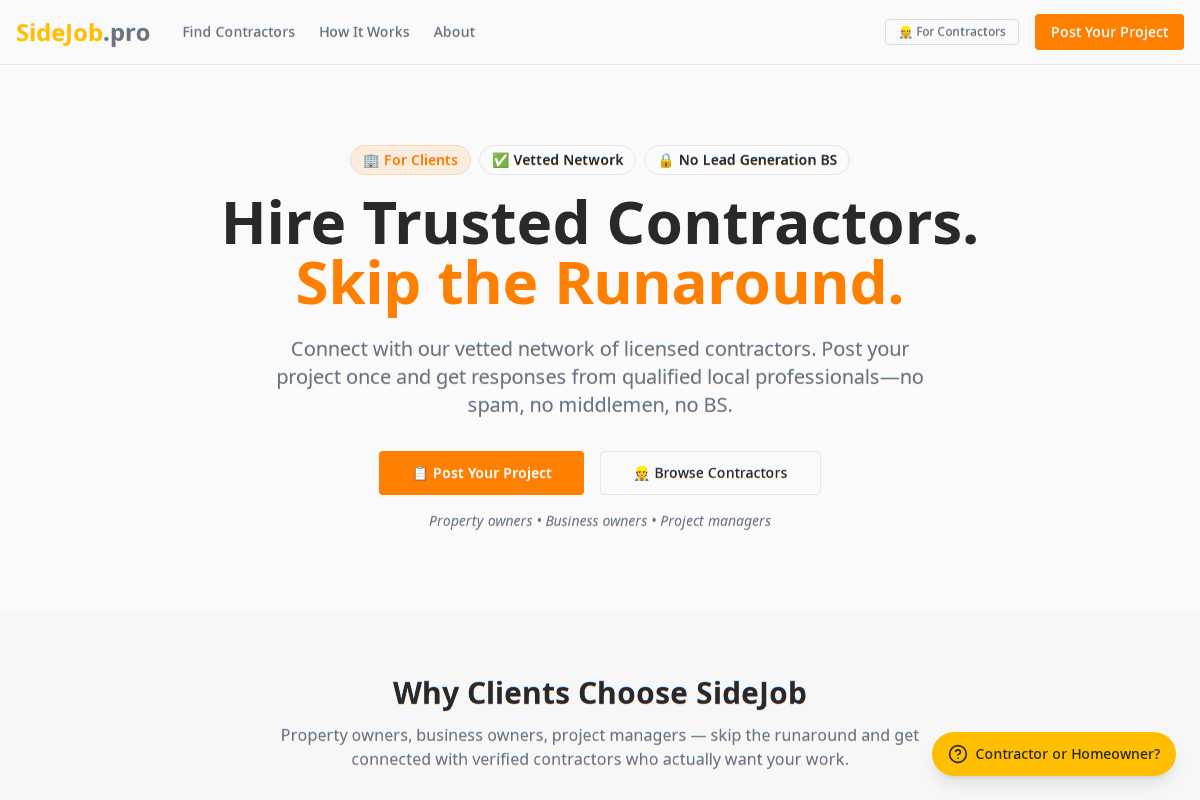
A plumber needs excavation equipment. An electrician needs concrete cutting. A homeowner needs someone who actually shows up. Currently, everyone spends hours cold-calling, waiting for callbacks, or getting their project sold to ten different bidders.
SideJob is a two-sided marketplace. Homeowners and property managers use sidejob.pro to find pre-vetted contractors with verified Idaho state licenses. Licensed contractors use crew.sidejob.pro to network, find subcontractors, and pick up side jobs from each other.
This isn't a lead generation service—your project goes to a curated network, not sold to the highest bidder ten times over. And it's not a nationwide corporate platform with franchises and call centers. Real local contractors, verified before they can join.
The payment philosophy is "NOOB"—None Of Our Business. Financial transactions happen directly between parties. We work on handshakes here; word is bond. The platform facilitates introductions, not transactions.
Built on dignity.ink principles: your professional data belongs to you, not us. We don't sell your information, don't surveil your activity for profit, and don't extract value from jobsite workers. Free forever.
The detail that matters: The gig economy exploits workers. SideJob proves you can build a marketplace that respects professionals instead of extracting from them.
HomeStar
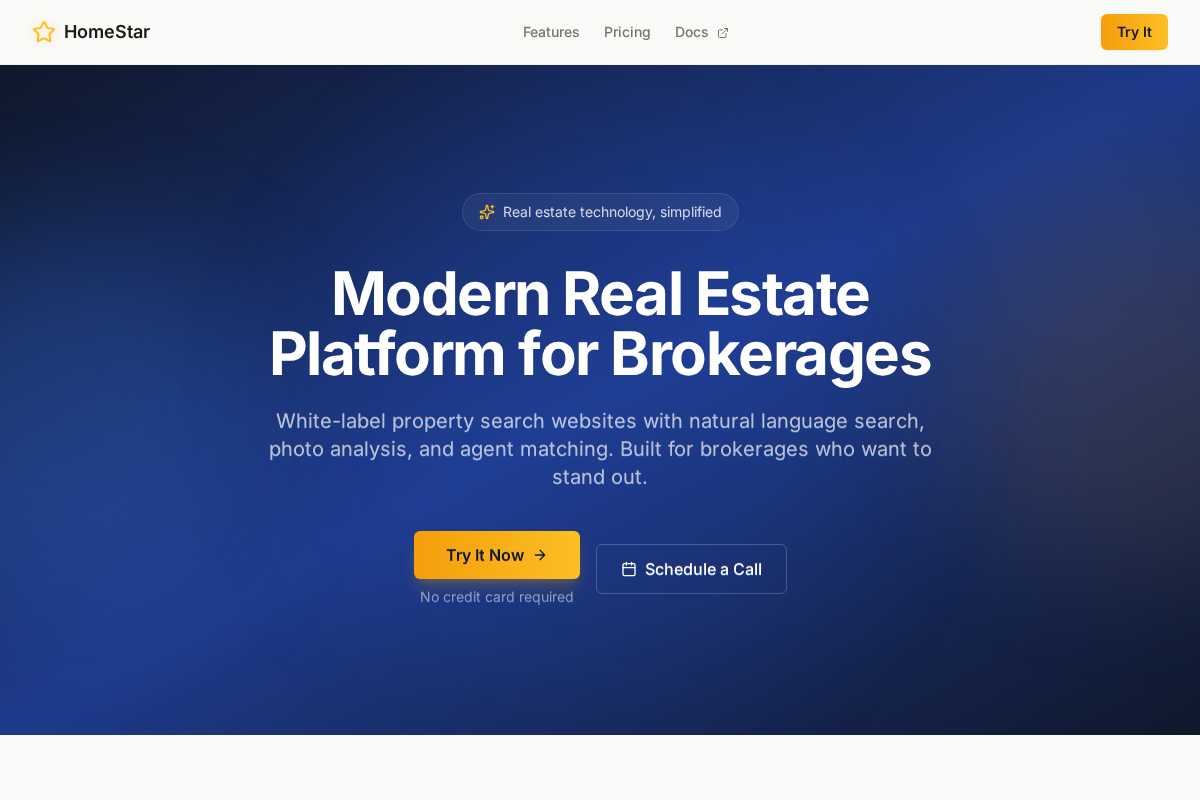
"Modern kitchen with mountain views." That's how buyers actually think about properties. Not "3 beds, 2 baths, 1,500-2,000 sq ft, $400K-$500K."
HomeStar is a white-label real estate platform for brokerages that lets buyers search the way they naturally describe what they want. The semantic search converts natural language into property matches. The photo analysis identifies features like "granite countertops" and "hardwood floors" directly from listing images—making them searchable even when they're not in the description.
Each brokerage gets their own branded site with their domain, their colors, their logo. MLSGrid, RESO Web API, and legacy RETS feeds sync automatically. Lead routing distributes inquiries to agents based on expertise and configurable rules. Analytics track what buyers are searching for in real-time.
The testimonials tell the story: "340% more leads." "Buyers stopped bouncing to other sites because they could finally describe what they actually wanted." One broker found listings with gas ranges—not from the description, but from the photos.
500K+ properties indexed. 50+ MLS integrations. 99.9% uptime SLA. Launch a fully branded property search site in days, not months.
The detail that matters: Property search has been broken for decades. Buyers think in terms of lifestyle; filters force them to think in spreadsheets. Semantic search bridges that gap.
RyanMalloy.com
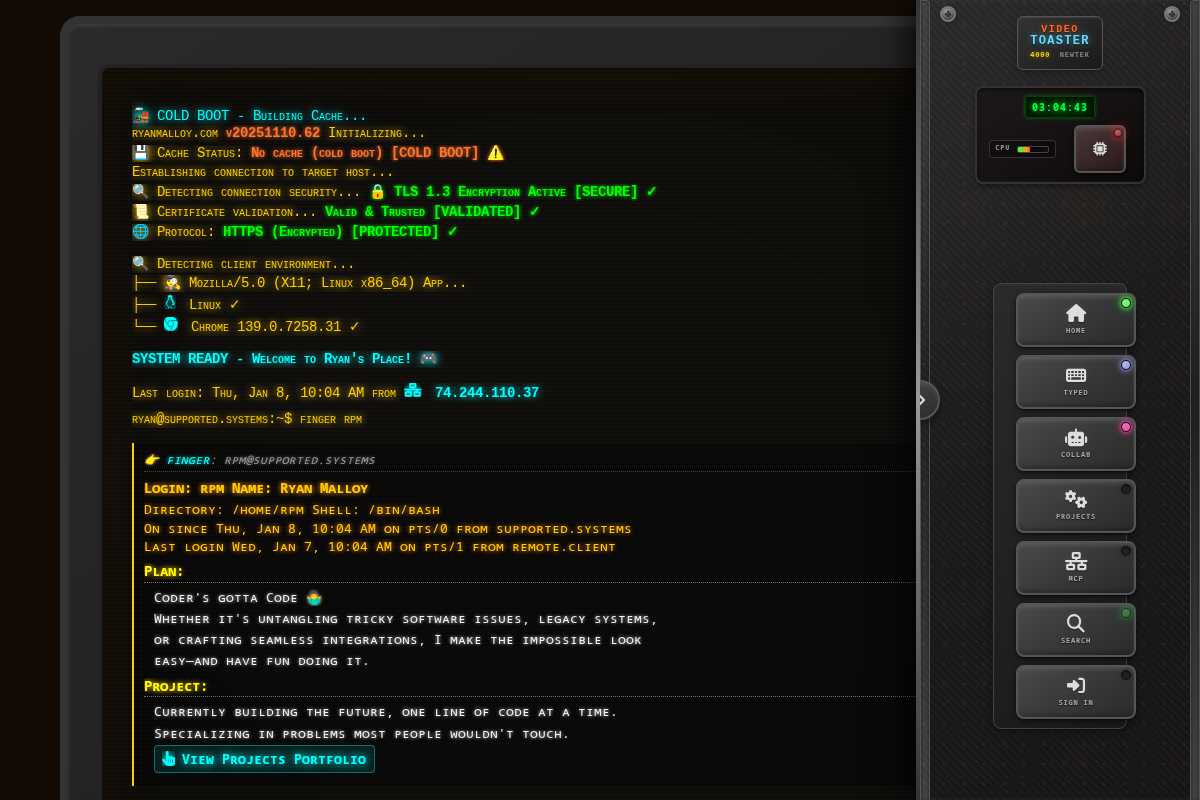
Registered Christmas Eve 2005. A personal site that refuses to be boring.
The homepage boots like an old Packard Bell—complete with ANSI terminal output, TLS certificate validation theater, and a simulated "finger" command showing the .plan file. Navigation happens through a Video Toaster 4000 control panel, because if you're going to build a personal site, you might as well make it memorable.
Underneath the nostalgia is a serious content architecture: 16 content collections covering everything from BBS culture and ANSI art galleries to protocol deep-dives and AI collaboration stories. The site functions as a PWA with sophisticated service worker caching—the "COLD BOOT" vs "WARM BOOT" diagnostics aren't just for show.
The heroes section profiles influences from DJB (whose tools powered the original email and DNS) to Margaret Hamilton (whose error handling philosophy shapes how I write code). The collaborations section documents AI partnership experiments. The textfiles collection preserves underground computing history.
Twenty years of accumulated digital archaeology, wrapped in a loving tribute to the era when personal sites had personality.
The detail that matters: Personal sites died when social media promised better reach. But a domain you control, content you own, and design that reflects who you are? That never stops being valuable.
Supported Systems

Twenty-six years from supportedsystems.com (registered Christmas Eve 2000) to today's digital installation. This isn't just a website—it's a showcase of what's possible when technology serves creativity instead of the other way around.
Built with Astro 5, React islands, and local-first AI. Features the Steward (our conversational guide), hand-drawn visual effects with organic animation physics, and a Diataxis-based learning framework. The contact page replaces forms with conversation, because custom work doesn't start with checkboxes.
The design aesthetic: dark gallery walls where warm paper typography pops. No AI buzzwords, no contact forms—just honest conversation and technology you can trust. PWA-enabled for offline use, self-hosted fonts, and every detail considered.
The detail that matters: The hand-drawn effects use physics-based animation—slow pen positioning, confident middle stroke, fatigue toward the end, plus micro-jitter during drawing. It doesn't just look hand-drawn; it feels authentically human.
The Atelier
The Atelier is the client-facing portal where active projects live. Instead of scattered email threads and Slack channels, clients get a dedicated workspace with their project timeline, deliverables, conversations, and the Steward AI assistant—all in one place.
The entrance sets the tone: batwing saloon doors swing open, revealing a personalized AI-generated greeting with typewriter effect. "Friends call me Stew," says the Steward, ready to help navigate your project.
Built with Astro and React, authenticated via Authentik (OIDC with PKCE flow), and powered by the share-api backend. Activity tracking, settings management, and streaming AI chat responses create an experience that feels personal, not transactional.
The portal reflects the same artisan aesthetic as the main site—dark gallery walls, warm typography, hand-drawn touches. Every interaction reinforces that this isn't a ticket system; it's a relationship.
The detail that matters: First impressions matter. The saloon door entrance isn't just visual flair—it signals that this portal respects your time and treats collaboration as craft, not process.
Inkscape: SVG 2.0 feDropShadow
"It's been 13 years since anybody added anything to the filters in Inkscape. Then along comes Ryan to add a perfectly agreeable, perfectly nice addition to support drop shadows in Inkscape."
That's Martin Owen-Williams (Inkscape core maintainer) describing merge request #7506—my contribution adding native SVG 2.0 feDropShadow support to Inkscape.
The timing was both fortunate and challenging. Martin was simultaneously re-engineering Inkscape's rendering engine. Rather than creating conflicts, we collaborated: I reviewed his access layer code, he provided guidance on the filter architecture, and we ensured the new drop shadow implementation would work seamlessly with the upcoming API changes.
The implementation required two architectural layers: SPFeDropShadow for the object model and FilterDropShadow for the rendering pipeline. Complete with CMYK color space support and full SVG 2.0 specification compliance.
First filter primitive in 13 years. Resolved long-standing issue #5939. Merged October 2025.
The detail that matters: Open source collaboration at its best: concurrent development on overlapping systems, resolved through communication rather than conflict. The code matters less than the willingness to work together.
l2trace
"Where is MAC address X right now?" Every network tool can answer that. "What path did that frame actually take through the switching fabric at 3 AM last Tuesday?" Nothing could. So I built it.
l2trace collects CAM tables, LLDP adjacencies, STP state, and ARP from switches over gNMI streaming, SNMP, and SSH, then stores every observation bitemporally in PostgreSQL: one time axis for when a fact was true on the wire, a second for when the system learned it. Late-arriving data becomes an explicit belief revision instead of a silent overwrite. That second axis powers the web UI's DeLorean time-circuits control: dial both clocks back and see the network as it was, or as you believed it was.
On top of that foundation: hop-by-hop L2 traceroute as a recursive SQL query (STP-blocking aware, LAG and MLAG collapsed into logical hops), a full-screen terminal UI, an Astro web UI, and change discovery that diffs the fabric between any two moments. It also grew a complete RFC 8907 TACACS+ server and 802.1X/RADIUS access control. Once you know where every MAC is and has been, deciding which MACs belong is the natural next question.
It runs in production on real networks, from a multi-site hospital system to my own home lab, deployed HA: Docker Swarm, Patroni-managed Postgres failover, and a three-node NATS JetStream cluster. Losing a node requires zero manual intervention.
The detail that matters: One timestamp tells you what the network is. Two tell you what it was, and what you believed about it at the time. The second time axis is the whole product.
Computing Origins
Before GitHub, before Stack Overflow, before the web itself—there was the BBS.
A 286 with a Hercules monitor. 2400 baud modems that screamed and hissed. ANSI art, door games, and FidoNet echoes. This was computing before the Internet made it mainstream, when every connection felt like an adventure and every new board was a discovery.
These archives capture that era: the underground textfile scene, the pioneers who shaped how we think about security and systems, and the moments that sparked a 40-year obsession with building what doesn't exist yet.
The detail that matters: Every technologist has an origin story. Understanding where someone comes from helps you understand what they build and why.
And More
Two decades of work includes projects we can't fully detail—enterprise systems, government installations, infrastructure that runs silently in the background.
The common thread: building what didn't exist, for organizations that refused to accept "that's not possible."
Why This Work
Technology should make humans more human, not less. It should empower, not surveil. It should belong to the people who use it, not the corporations that sell it.
After four decades in this industry, I've seen what happens when technology serves shareholders instead of users. Dark patterns, data harvesting, planned obsolescence. The alternative is simple: build things people actually own, that work for them, that respect their dignity.
That's the work. That's why it matters.
Have a problem that off-the-shelf can't solve?